
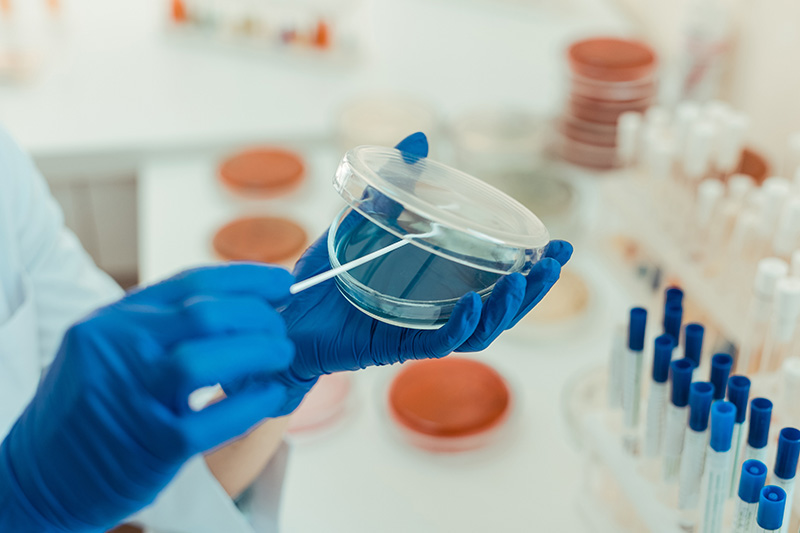
Take Root Bio worked with Heriot-Watt University to successfully turn salty whey, a high-volume by-product from cheese production, into a widely used fuel called bioethanol.
Supported by the Industrial Biotechnology Innovation Centre (IBioIC), which connected the two organisations through its industry network, the project brought together Take Root Bio’s closed-loop approach with Heriot-Watt’s expertise in bio-based solutions.
Together, they looked at how the sugars found in salty whey could be transformed through a bio-based process, creating value from a material that is often difficult and costly to manage. The process also leaves behind a secondary stream that could potentially be recovered and reused.
The challenge of disposing of salty whey is significant. Around 95,000 tonnes are generated in the UK each year from production of cheddar and similar cheeses, and its combination of milk sugars and high salt content makes management particularly difficult.
A single dairy producer can generate tens of thousands of litres every week, creating both environmental and economic pressures for the sector.
While the project focuses on dairy waste, the thinking behind it comes directly from the company's roots in biosphere engineering and complements Heriot-Watt’s circular economy expertise. In the kinds of systems Take Root Bio develops, resources are kept in use for as long as possible, with one process feeding into the next rather than creating waste.
That same thinking runs through Heriot-Watt's side of the project. Its scientists specialise in finding new value in food and drink by-products. They use biological processes to turn difficult materials into usable resources, making the partnership a natural fit.
If we can help turn something that currently costs money to manage into something with real value, that's a positive outcome for both dairy producers and the environment
At the heart of the project was the idea that salty whey could be treated as a resource rather than waste, meaning dairy producers could potentially reduce the costs associated with its management while providing feedstock for new bio-based products. The company is also looking at whether mobile production units could be deployed closer to where these by-products are produced, helping to reduce transport requirements and making the concept easier to scale.
Kirk Siderman-Wolter, founder of Take Root Bio, said: "We've always been interested in what happens when you stop looking at something as waste and start asking what else it could become. The company began by looking at how people might grow food in space, where every resource matters and nothing can be thrown away. The same principles apply surprisingly well here on Earth. Salty whey is produced in huge volumes and can be difficult to deal with, so we wanted to find out whether there was a better use for it.
"If we can help turn something that currently costs money to manage into something with real value, that's a positive outcome for both dairy producers and the environment."
Heriot-Watt has taught and researched brewing and distilling since 1903 and is home to the International Centre for Brewing and Distilling (ICBD). The university is also developing plans for a new Centre for Sustainable Brewing and Distilling to help the sector address environmental challenges and support more sustainable ways of working.
Dr Jane White, an expert in waste valorisation at Heriot-Watt University, said: "Food and drink manufacturing produces a huge range of by-products, many of which still contain valuable components but can be challenging to manage. That makes them interesting candidates for bio-based processes that can recover value from materials that might otherwise be treated as waste."
Looking ahead, Take Root Bio, collaborating with Heriot-Watt University, is investigating whether similar techniques could be applied to other food and agricultural by-products, including waste from fruit and vegetable processing. The company is also exploring ways to capture gases generated during fermentation, such as methane and hydrogen, for use in future food production systems.


